
History of NEKO’s Campaigns
Before spring 2023, NEKO had campaigns in food sovereignty, disability justice, and mental health. Leaders and members had done listening in and around Barton and Orleans as part of the mental health campaign. They heard from a lot of neighbors in Barton, most of whom were disabled and elderly, that they missed the Senior Meal Site that closed during the pandemic. Many were lonely and isolated, which contributed to worsening mental health. People also discussed concerns about affordable housing in the area. Post-pandemic Vermont saw a rise in homelessness and a shortage of available homes and apartments.
In the May, 2023 NEKO Membership Assembly, NEKO members voted on two new campaigns: housing and social connection. Housing to promote housing that reflected the needs of the community rather than the needs of developers, and social connection to build community across socio-economic and perceived barriers.
In July, 2023, Vermont was hit with a 100-year flood. Parts of the NEK were hit incredibly hard, and small municipalities had a hard time keeping up. NEKO Campaign Director Meghan Wayland led volunteer and community run flood recovery efforts, and helped stand up kuRRve, the NEK’s long-term recovery group (LTRG).
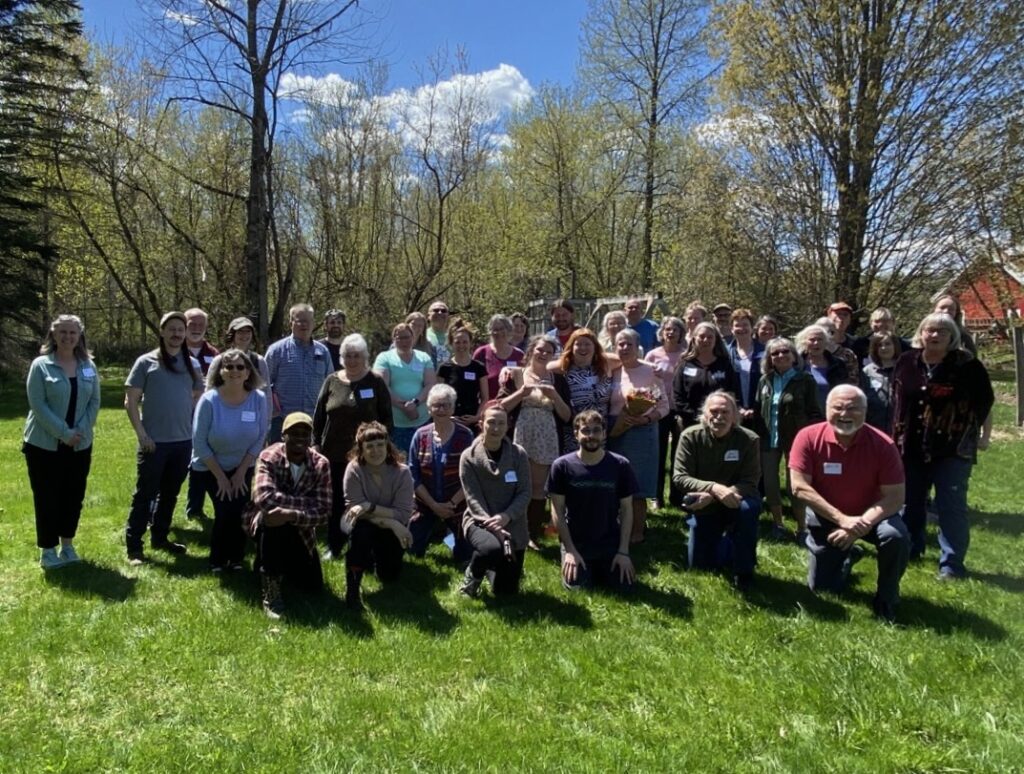
NEKO Members at 2023 Membership Assembly
From this, NEKO began to strongly integrate mutual aid as a pillar of its work. And when the NEK was hit with floods again on July 10 and July 30, 2024, NEKO and kuRRve were able to mobilize and step in to volunteer, community run flood relief. Rural Vermont was having a harder time rebuilding from flooding than more urban areas. Low income Vermonters were also hit harder, with mobile home parks in flood plains. Municipalities didn’t have the capacity and funding to rebuild entire dirt roads washed out.
Flood relief work is mutual aid work. It is showing up for neighbors in times of need because everyone is struggling, and all take care of each other. But through flood relief came organizing. NEKO partnered with Community Resilience Organizations and flood organizers to build the Resilience Hub Toolkit, a guide on how to build a permanently organized community ready to handle disasters.
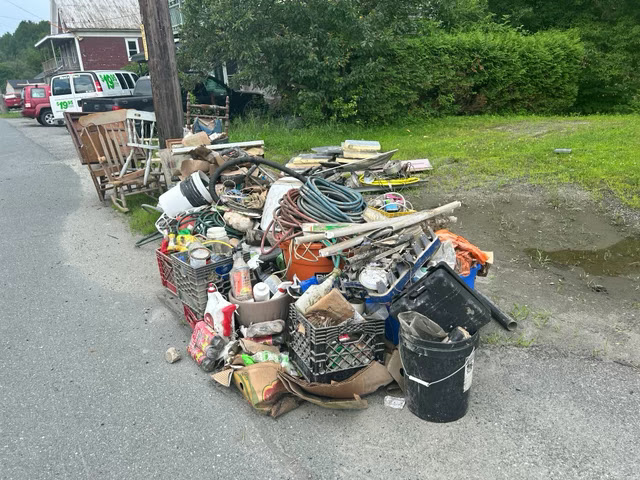
Trash from flooding, 2024
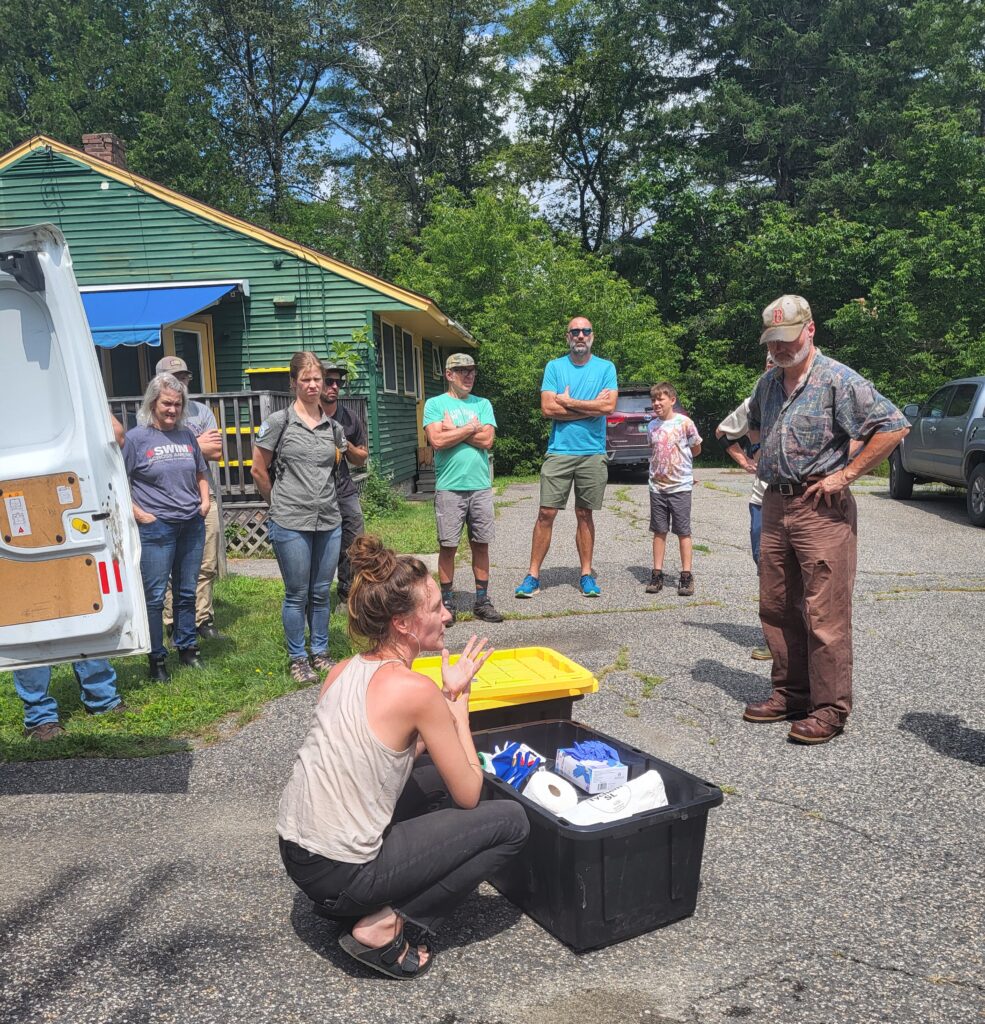
Meghan Wayland explaining a flood work tote to volunteers at the Lyndon Studio
Flooding & Resilience Hubs
The Barton Hub is a multi-use community space in Barton Village. Northeast Kingdom Organizing (NEKO) – in partnership with Center for an Agricultural Economy (CAE) and the Barton Community Giving Garden (BCGG) – went door-to-door among 6 low-income and senior housing facilities and neighborhoods in Barton and Orleans to ask 411 residents (25% of the population) what they saw as the key opportunities and challenges in their villages. Of those interviewed, 70% of Barton residents named the return of the Barton Senior Meal site – which had closed during the pandemic – among their most pressing concerns and emphasized its importance to the social fabric of the community. NEKO partnered with Glover-Barton Senior Services to restart the Barton community meal, and NEKO took over the Barton meal site in 2025.
The Barton Hub has grown into a twice-a-week community lunch and giving pantry, with weekly events, music, training, and a community event incubator. Barton Hub Leaders, who start as meal-goers, become leaders in the food pantry, develop the menu and cook the lunches, create programming, and host events. The Hub addresses food insecurity in Barton, with a pay-what-you-can lunch. Ingredients are bought from the C&C grocery store next door to keep dollars in the local economy. The Giving Pantry is open from 9am – 1pm, with pantry staples, a puzzle library, and personal hygiene items. The pantry receives donations of cat and dog food from the Feline and Friends Foundation, the Leach Library in Irasburg collects donations, the local schools host food drives, and community members who use the pantry bring items when they can. It’s a community-run and community-driven food pantry.
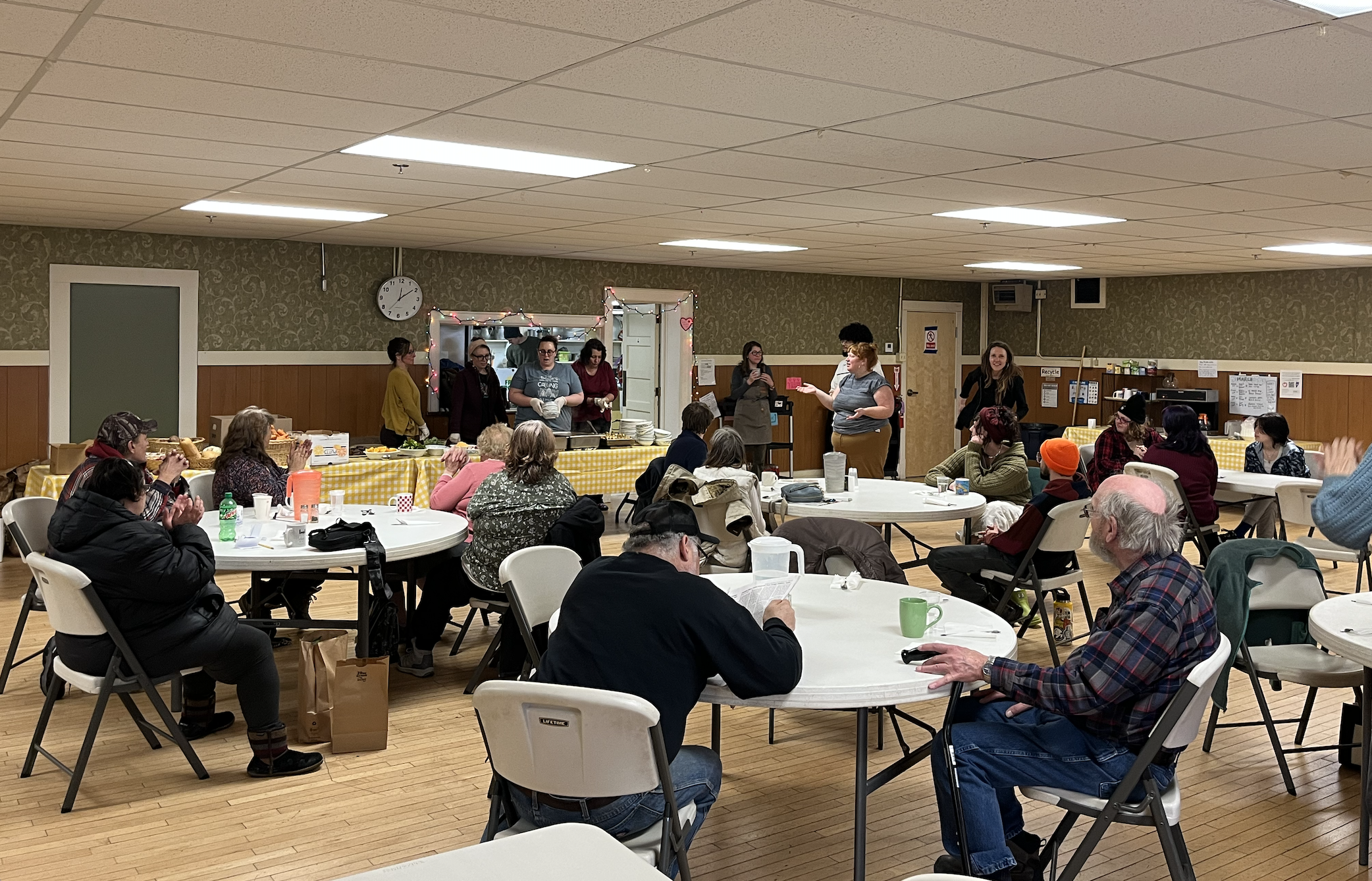
Barton Hub Community Meal in Barton, VT
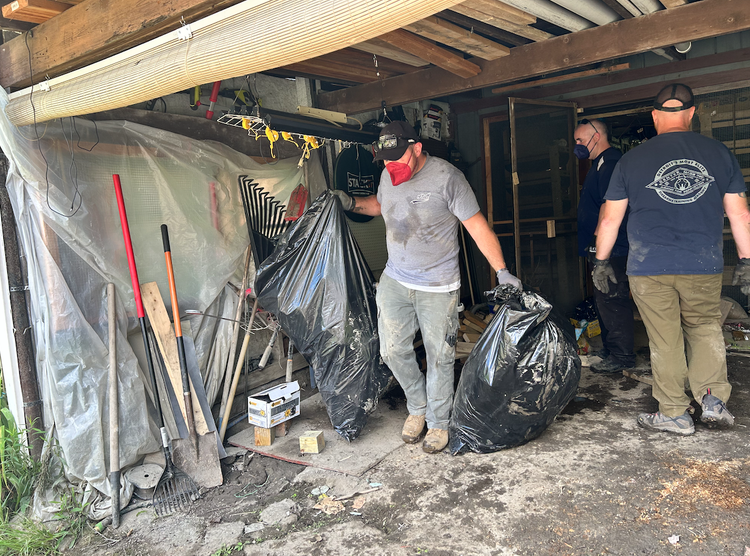
Volunteers remove trash from a flooded home, 2023
On July 10, 2023, flood waters rose across the state. In the NEK, rural communities were flooded with little resources and attention to help rebuild. Because NEKO leaders had established relationships with vulnerable neighbors, they were able to quickly mobilize to conduct phone trees and canvassing to assess damage and start mobilizing supplies. The Barton Hub and the Orleans Federated Church became sites for flood survivors to receive help, emotional support, and material support to try to rebuild.
When Vermont flooded again on July 10 and July 30, 2024, NEKO mobilized again to organize volunteer flood relief. Over the course of eight weeks, 600 volunteers mucked and gutted 450 homes across the NEK, with businesses and organizations coming out to support flood survivors and volunteers. NEKO connected with other flood relief organizations across the state to create the People’s Demands for Just Flood Recovery, demanding better housing, administration, and ecological protections for flood recovery. This coalition also created the Resilience Hub Toolkit, a 50-page work book to organize your community to handle disasters, both natural and man-made. This toolkit builds off of the Barton Hub’s model, with community meals and mutual aid supplies to support community structures and strengthen ties.
Projects of Survival and Kairos
NEKO became involved with The Kairos Center one year ago during our joint organizing effort with the Vermont Workers Center around the possible closures or cutting of services at hospitals in Vermont as recommended in the Wyman Report put out by the Green Mountain Care Board. We were invited to join a national, strategic organizing training led by Kairos with other organizers from across the country who gathered together for three days in Baltimore in October 2025. Over these three days we engaged in deep study for 8-10 hours/day on the Johnnie Tillmon organizing model and other movements of the poor and dispossessed throughout the history of this country. We listened, shared and learned from others doing this work in urban and rural areas in New Jersey, Alabama, Kansas, Washington D.C., and many other places. These 3 days were peppered throughout with Songs in the Key of Resistance, shared with us by the cultural organizers who were engaged in their own deep study of the importance of song and culture in organizing movements of the past – because we must assert the necessity and our right for joy as we fight for liberation. What we learned over those three days – or what was solidified for us – is that while the struggle may manifest in different ways, we are all struggling against the same death dealing systems whose only aim is to weaken and fracture our efforts to live with the dignity that is our human right. But, as William Barber says, this only sparks in us the resolve “to increase, intensify, and embolden our agitation for what is right.” Our very lives depend on it, and we see that in the NEK. You don’t need to belong to any particular political party to see that people are hurting. You only need eyes. We want to create systems that work for everyone.
The Kairos Center comes out of a tradition of very grassroots organizing in the U.S., in particular among the unhoused and welfare recipients. This organizing, by necessity, always included practices of meeting the material needs of those who were being organized. These projects of survival are not charity or even mutual aid. They are oriented around providing for the needs of the community, so as to enable collective struggle and long-term movement building. The goal is not just to help each other get by. The goal is to help each other get by as we build the power needed to fundamentally change the conditions we are living under.
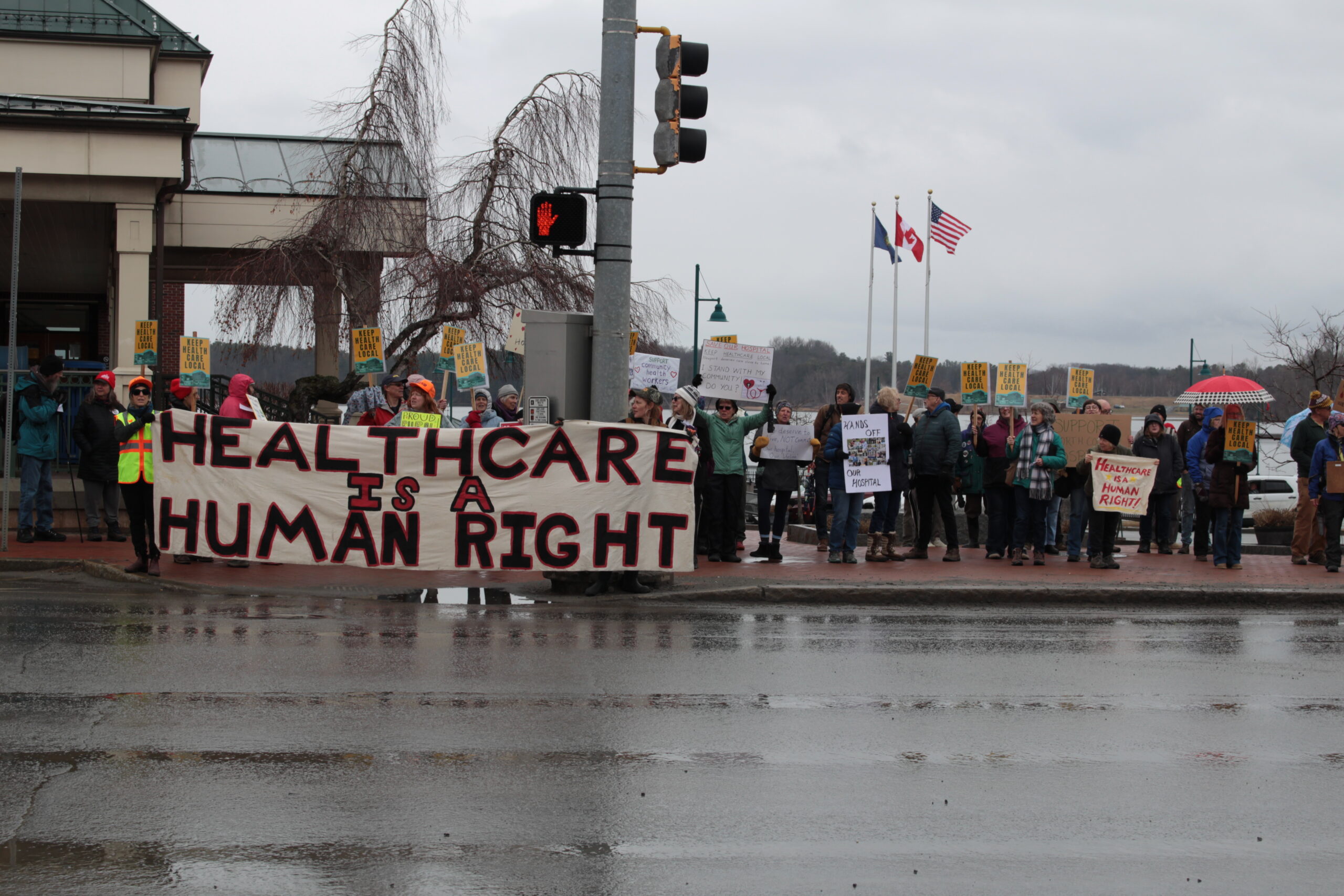
Neighbors rally for North Country Hospital in Newport, VT on April 12, 2025
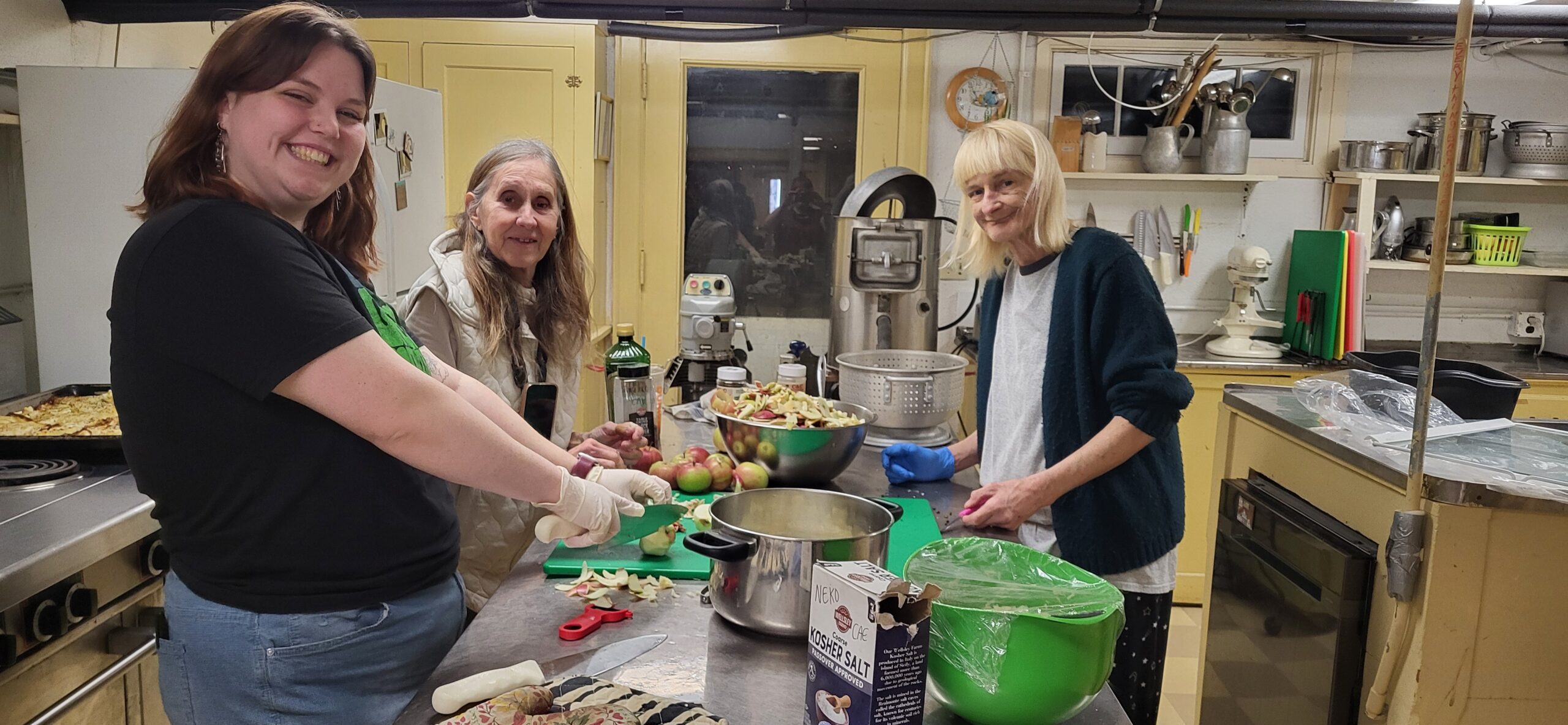
Barton Hub cooks cut apples for the Community lunch!
Projects of Survival have been fundamental to NEKO from the very beginning. This practice of communities coming together to meet the needs of the people is what we are all about. For example we come together to have a meal; some people cook, some folks set the table, some folks corral the kiddos; everyone has a part to play. We sit, eat, and share about our joys and our struggles, through the cultivation of these relationships over time we build trust. We let walls down and see where our struggles overlap and intersect and we begin to deepen the conversations around why are things like this and what can we do about it together?
Kairos joined us for a community conversation at the Barton Hub in December, met with faith leaders across the NEK, and joined a meeting with the Keep Healthcare Local group in Newport. It is with intention for settling into a decades-long organizing effort that NEKO is connecting with Kairos, VWC and other organizations who are engaged in building a movement led by the poor. We know that we cannot do this alone and we know that it is those who we are walking shoulder to shoulder with, those of us who walk through the doors of the Barton Hub, who are part of the Keep Healthcare Local group in Newport – these are our leaders for the fight ahead. You, We, are the leaders for the fight ahead. Building a coalition with other groups is critical to bolster us for this work- to learn from each other – what is working, what is not working. To celebrate and grieve together and build a system that works for all of us.
Resilience Hubs and Survival Projects
To respond to the ongoing and ever-changing needs of our communities, NEKO changed its campaign to “Resilience Survival Projects.” This uses both NEKO’s established Resilience Hub framework and the Johnnie Tillmon organizing model. All of this is so deeply rooted in our organization’s values of Dignity & Connection, Participation & Inclusion, and Care for the Natural World.
Dignity and Connection: We build connection through food, through listening, and through uplifting the voices of rural Vermonters. We meet neighbors where they are and invite them to organize for Vermont’s Northeast Kingdom. In our rural communities, building intentional and accessible spaces for connecting is crucial to stop social isolation, division, and worsening mental and physical health. We are all healthier and stronger when we are able to lean on each other in days of celebration and in times of crisis. This builds empathy and compassion, which builds dignity and leadership.
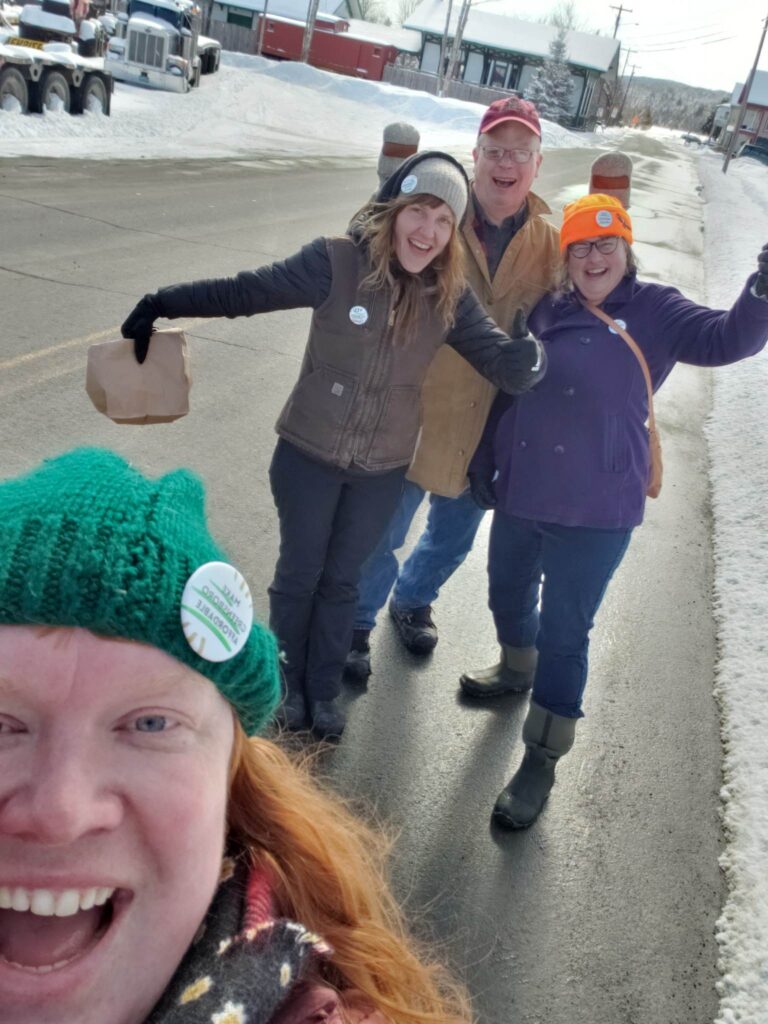
NEKO Leaders canvassing in Greensboro Bend
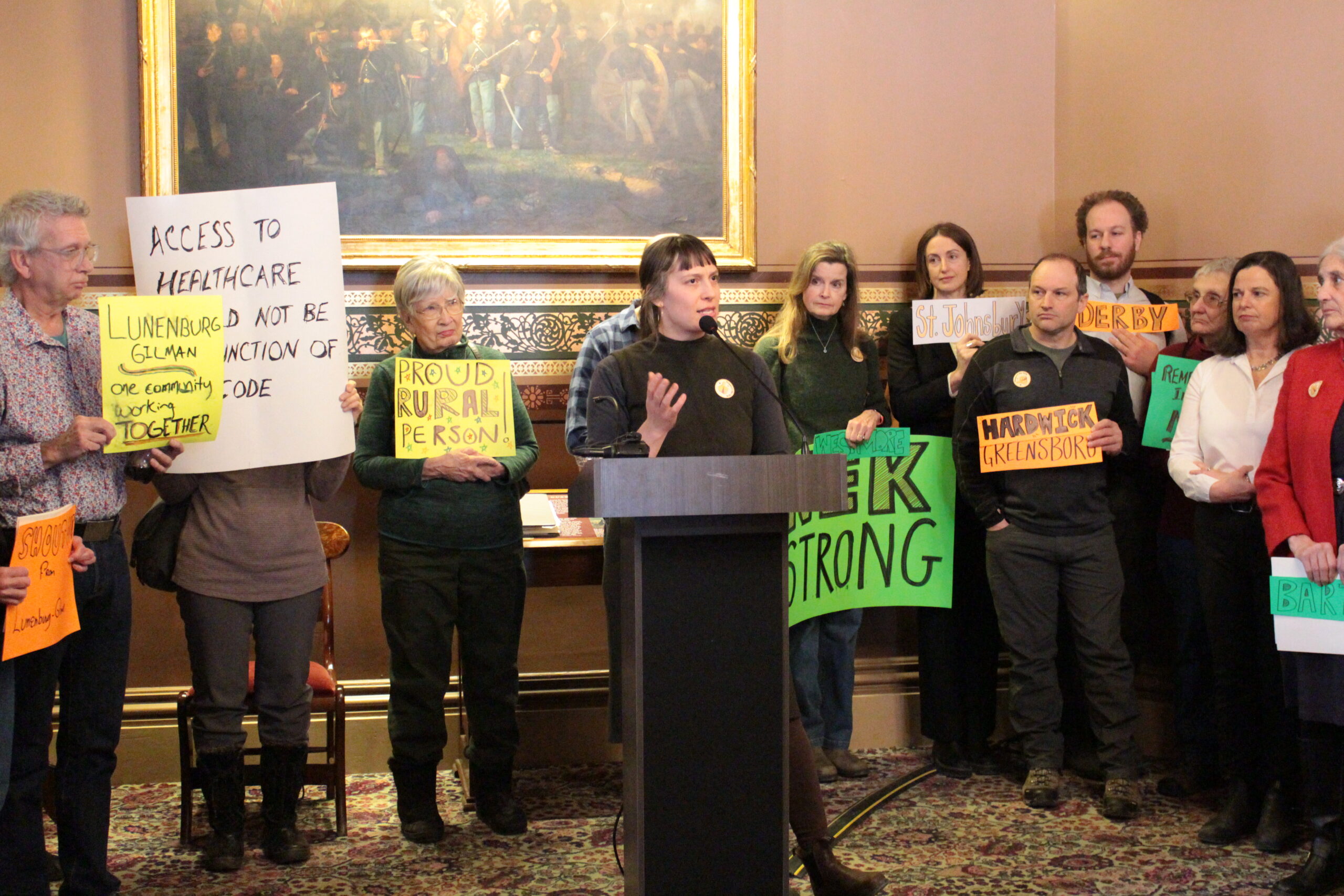
Megan Matthers, NEKO leader and flood organizer, speaks about flood relief work in Lyndon at NEK Day at the State house, 2025
Participation and Inclusion: Resilience Hubs start through community meals as a way to build leadership and provide mutual support for neighbors. Everyone needs to eat but everyone does not have equal access to food. NEKO’s origin as a project of the Center for an Agricultural Economy shows a through-line of food as organizing in our history and in our region. Food connects, and building spaces for food and connection is crucial to building systems of care. Every Hub must have a community meal aspect of its work. Through community meals, we build leadership, belonging, mentorship, while also expanding access to home cooked meals. Everyone works in the kitchen together, eats together, and cleans together, as a way to build relationships and expand empathy. No one is left behind.
Care for the Natural World: This project is rooted in the flood relief work led by Meghan Wayland in 2023. Meghan was a lead organizer for NEKO, and pivoted to organize flood relief. This was an untraditional style of organizing, but one that put NEKO on its current path. When the NEK flooded again in 2024, NEKO was able to jump into action and pivot to organize the local flood recovery work. We carried our values of mutual aid, solidarity not charity, and providing material needs. The same exploitative systems that hurt the poor also extract resources from the earth. We must maintain and steward land through building community resilience. We strengthen our relationships with the land and with each other through care for the natural world, and how we fit into it.This is part of a larger understanding of our current political moment.
Rural communities have consistently been left behind and forgotten in all disasters. But from that we build relationships, networks of supplies, chains of communication, and a deep respect for humanity. We are building the world we need to protect everyone, and make sure no one is left behind. We are committed to organizing for the long haul, just as others have done before us. This project will empower rural Vermonters to build the world they need to survive and thrive.
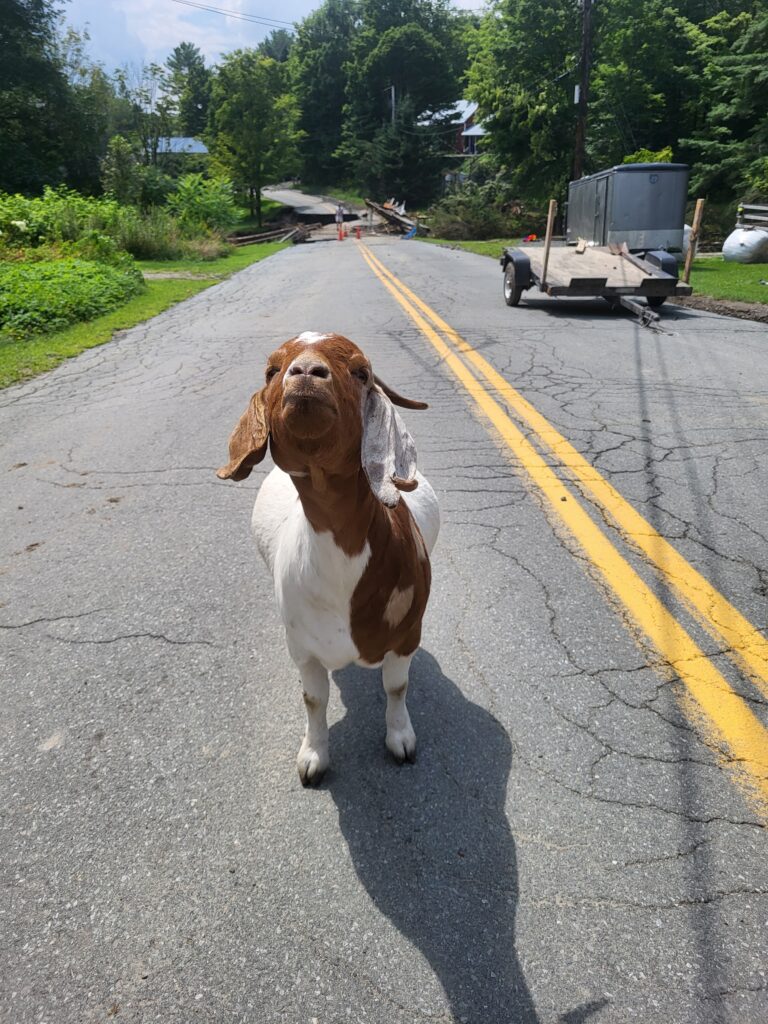
A flood survivor’s goat saying hello!